Why Trucking Regulations Matter for Georgia Drivers
Trucking regulations play a vital role in keeping Georgia’s highways safe—from busy corridors like I-20 near Douglasville to heavy-traffic routes throughout Fulton County, Gwinnett County, and the North Georgia suburbs. These safety rules help ensure that commercial carriers follow strict standards for vehicle maintenance, driver training, rest schedules, cargo loading, and operating practices. When these rules are ignored, the chance of a devastating collision increases dramatically, often resulting in an affected case that leads to a complex commercial truck accident claim.

Across Georgia, violations such as hours-of-service breaches, overloaded trailers, and faulty brake systems contribute to some of the most serious truck crashes on local and interstate roads. Whether a collision occurs near Alpharetta’s Windward Parkway, along I-75 heading into Cobb County, or on rural stretches of State Route 166, the consequences can deeply impact injured motorists and their families. Understanding how trucking regulations apply is the first step toward protecting your rights.
At Hartley, Rowe, & Fowler, P.C., our attorneys bring decades of insight to navigating trucking-industry standards and helping clients pursue justice throughout Georgia and beyond. Our positive, client-focused approach ensures that truck accident victims receive the guidance and advocacy they need during every phase of a commercial truck accident claim.
Understanding Key Federal Trucking Regulations
Federal trucking regulations set the nationwide safety framework that governs the commercial transportation industry. These rules, created and enforced by the Federal Motor Carrier Safety Administration (FMCSA), apply to long-haul drivers, motor carriers, fleet owners, and logistics companies operating throughout Georgia and across state lines. Whether trucks are traveling through Douglas County, heading down I-85 toward Coweta County, or moving cargo into the Port of Savannah, compliance with FMCSA standards is essential to preventing an affected case that later becomes a complex commercial truck accident claim.
FMCSA rules focus on critical safety areas such as driver hours-of-service limits, alcohol and drug testing requirements, routine vehicle inspections, maintenance records, load-securement standards, and proper licensing through the Commercial Driver’s License (CDL) system. These trucking regulations exist to reduce driver fatigue, improve roadway awareness, and lower the risk of catastrophic collisions on Georgia roadways—from busy metro areas like Atlanta to smaller communities along Highway 278 or State Route 92.
Hours-of-Service (HOS) Regulations
Hours-of-Service rules are among the most critical trucking regulations designed to prevent fatigue-related crashes on Georgia roadways. Whether tractor-trailers are traveling through Alpharetta’s business corridors, navigating I-20 near Douglasville, or hauling freight through rural counties like Paulding or Carroll, HOS compliance helps reduce the risk of an affected case that may lead to a serious commercial truck accident claim.
Driving Limits to Reduce Fatigue
Federal HOS rules restrict the number of hours a commercial driver can operate a truck each day and each week. These limits help ensure drivers remain alert while hauling cargo through busy routes such as I-75, Georgia 400, or Highway 54.
Required Rest Breaks and Off-Duty Time
Drivers must take mandatory rest periods, meal breaks, and overnight off-duty time. These requirements play a major role in keeping motorists safe by preventing exhausted drivers from staying behind the wheel too long.
Electronic Logging Device (ELD) Requirements
To enforce these trucking regulations, the FMCSA requires Electronic Logging Devices that automatically record driving time. Accurate ELD data can be invaluable when investigating an affected case, helping determine whether a driver exceeded legal limits.
Impact of HOS Violations on Liability
If a truck driver or carrier ignores HOS rules, it can significantly strengthen a commercial truck accident claim. Violations often point to negligence, unsafe scheduling practices, or inadequate supervision—factors that may shift liability toward the trucking company.
Vehicle Maintenance and Inspection Requirements
Georgia roadways—from the rolling routes of Coweta County to the busy trucking corridors of I-285, I-75, and State Route 400—see thousands of commercial vehicles daily. Strong trucking regulations help ensure these trucks are safe for the road, and maintenance requirements play a major role in preventing an accident that could lead to a costly commercial truck accident claim. At Hartley, Rowe, & Fowler, P.C., we help clients understand how these rules influence liability and case outcomes.
Mandatory Pre-Trip and Post-Trip Inspections
Federal law requires drivers to conduct thorough inspections before and after each trip. These safety reviews cover critical systems such as brakes, tires, steering, and lighting—components that matter whether a truck is cruising through Alpharetta’s Windward Parkway or heading toward the industrial hubs of Douglasville.
Essential Maintenance Standards
Routine servicing is a key component of trucking regulations. Carriers must keep vehicles in safe operating condition, ensuring functioning brake systems, proper tire tread, secure cargo, and compliant lighting. Neglecting these requirements increases the likelihood of mechanical failures on major Georgia highways like I-20 or US-78.
Company Responsibilities for Record Keeping
Trucking companies must document all repairs, inspections, and service intervals. These records often become crucial in an affected case, helping show whether a company ignored warning signs or skipped necessary maintenance.
How Poor Maintenance Leads to Accidents
Faulty brakes, blown tires, or unsecured loads can all trigger devastating crashes. When inadequate inspections or ignored repairs cause an incident, it may strengthen a commercial truck accident claim by establishing clear negligence.
Driver Qualifications and Training Standards
Strong trucking regulations don’t just govern vehicles—they ensure that the individuals operating commercial trucks on Georgia highways are properly trained, vetted, and medically fit. Across communities such as Alpharetta, Douglasville, Marietta, Rome, and throughout Fulton, Gwinnett, and Cobb Counties, qualified drivers play a major role in preventing crashes and reducing the likelihood of an accident that may lead to a commercial truck accident claim. At Hartley, Rowe, & Fowler, P.C., we help clients understand how driver qualifications influence liability in trucking collision cases.
Commercial Driver’s License (CDL) Requirements
Every commercial truck operator must hold a valid CDL that corresponds to their vehicle type and hauling responsibilities. This includes proper endorsements for tanker trucks, hazardous materials, or multi-trailer configurations. Whether driving along I-75 through Clayton County or navigating rural roads in Paulding County, CDL requirements function as a foundational safety standard.
Background Checks and Medical Certifications
Federal law requires in-depth background reviews, including driving history checks, employment verification, and medical evaluations. Drivers must undergo routine physicals to ensure they are healthy enough to manage long hours behind the wheel. When a trucking company skips these steps, it may create an affected case by allowing an unqualified operator on the road.
Drug and Alcohol Testing Requirements
Commercial drivers are subject to pre-employment, random, post-accident, and reasonable-suspicion testing. These rules protect Georgia motorists traveling on major corridors such as Highway 92, the Downtown Connector, and I-20. If a trucker is impaired at the time of a crash, it significantly strengthens a commercial truck accident claim due to clear violations of federal safety standards.
Consequences of Unqualified or Impaired Drivers
When a driver lacks the proper training, endorsements, or physical capability, or when impairment plays a role, Georgia accident victims may face severe injuries such as brain or spinal cord injuries. These scenarios frequently lead to actionable claims because trucking companies are responsible for ensuring compliance with all trucking regulations. When they fail, Hartley, Rowe, & Fowler, P.C. stands ready to protect victims’ rights and pursue the compensation they deserve.
Rules for Cargo Loading and Securement
Proper cargo handling is a critical part of trucking regulations, especially on Georgia’s busiest transportation corridors like I-85, I-285, Highway 400, and the Savannah Port routes. When freight is secured correctly, heavy commercial vehicles operate more safely—reducing the likelihood of rollover crashes, shifting loads, and catastrophic collisions. At Hartley, Rowe, & Fowler, P.C., we help clients understand how improper loading practices can directly influence an affected case and strengthen a commercial truck accident claim.
Weight Limits and Distribution Guidelines
Georgia follows federal weight standards that restrict overall truck weight and axle load to prevent instability and road damage. Uneven distribution—common on trucks traveling through areas like Gwinnett County or the Westside of Atlanta—can cause fishtailing, jackknifing, and brake failures. When weight violations occur, multiple parties may be held accountable.
Safe Loading Practices for Different Freight Types
Flatbed haulers, dry vans, tanker trucks, and refrigerated trailers each require distinct loading procedures. Federal cargo-securement rules dictate how tie-downs, straps, chocks, and locking systems must be used. Whether freight is being moved between Douglas County warehouses or distribution hubs in Alpharetta, safe loading procedures ensure the truck remains stable during turns, stops, and lane changes.
Impact of Unsecured or Overloaded Cargo
When cargo shifts or spills onto high-traffic roads like I-20 or Highway 78, accident severity increases dramatically. Overloaded trailers place excess strain on tires and braking systems, increasing the chances of blowouts and rear-end collisions. These factors can significantly influence an affected case, showing that preventable errors contributed to the crash.
Liability for Third-Party Loaders or Contractors
In many situations, freight is loaded by third-party logistics teams, warehouse workers, or independent contractors—not the truck driver. Under federal and Georgia law, these entities may share liability if their negligence contributed to the unsafe load. This means a commercial truck accident claim may involve multiple defendants, each accountable for failing to follow essential trucking regulations.
With deep experience guiding accident victims across Georgia, Hartley, Rowe, & Fowler, P.C. is committed to helping injured motorists uncover the truth behind improper loading practices and pursue the compensation they deserve.
Trucking Company Responsibilities

Trucking companies across Georgia play a vital role in keeping motorists safe, especially along busy routes like I-75, I-85, I-20, Highway 92, and regional corridors stretching through Fulton, Cobb, Paulding, and Forsyth counties. When these companies fail to meet their legal obligations under state and federal trucking regulations, it can significantly influence an affected case and strengthen the foundation of a commercial truck accident claim. At Hartley, Rowe, & Fowler, P.C., we help injured clients uncover corporate failures and pursue accountability.
Hiring and Supervision Obligations
Companies must hire qualified, trained drivers with clean safety records. This includes background checks, CDL verification, medical certifications, and drug/alcohol screening. When trucking companies hire unsafe or inexperienced operators—common in high-traffic logistics zones like Savannah or Macon—they can be held liable for negligent hiring.
Monitoring Driver Compliance with Federal Rules
Georgia trucking carriers must actively monitor Hours-of-Service (HOS) logs, Electronic Logging Device (ELD) data, vehicle inspection reports, and weight compliance. Failure to keep drivers within mandatory safety limits can evidence corporate negligence, especially when fatigue-related crashes occur on long-haul routes.
Maintaining Safety Records and Incident Reports
Trucking companies are legally required to retain maintenance logs, inspection documents, driver qualification files, and internal safety reports. Gaps or falsifications in these records often become key evidence in an affected case.
Corporate Negligence and “Negligent Entrustment” Claims
If a company knowingly allows an unsafe driver to operate a commercial vehicle—or ignores recurring safety violations—they may face negligent entrustment claims. This adds a powerful layer of liability to a commercial truck accident claim, increasing the potential for full compensation.
How Violations of Regulations Impact Your Case
When a trucking company or commercial driver breaks state or federal trucking regulations, it can dramatically change the outcome of an affected case and strengthen the foundation of your commercial truck accident claim. At Hartley, Rowe, & Fowler, P.C., our attorneys know how to use regulatory violations strategically to help Georgia clients obtain the compensation they deserve.
How Proving Violations Strengthens Liability Arguments
When a truck driver or carrier violates required safety rules—especially along high-traffic routes like I-20 near Douglasville, GA-400 through Alpharetta, or rural corridors in Carroll, Fulton, and Cherokee counties—it becomes easier to link their actions to the collision. Violations support a clear argument that the defendant failed to uphold their duty of care.
The Role of Negligence Per Se
Georgia law recognizes “negligence per se,” meaning that if a defendant violates safety laws designed to protect the public, that violation automatically supports liability. In a commercial truck accident claim, proving noncompliance with trucking regulations can shift the burden in your favor.
Using Black Box Data, Logs, and Records
Our legal team examines:
- Electronic Logging Device (ELD) data
- Black box (ECM) crash information
- Inspection reports
- Maintenance and repair logs
- Safety and cargo-securement records
This documentation helps pinpoint regulatory breaches, identify fatigue, prove speeding or hard braking, or show maintenance neglect.
How Noncompliance Can Increase Damages
When violations are severe—such as falsified logs, ignored mechanical issues, or knowingly overloading cargo—courts may award greater damages. In some affected case scenarios, noncompliance can support punitive damages, especially when corporate negligence or reckless misconduct is involved.
Evidence Used to Prove Regulatory Violations
Building a strong commercial truck accident claim in Georgia often hinges on uncovering proof that a trucking company or driver violated state or federal trucking regulations. At Hartley, Rowe, & Fowler, P.C., our attorneys use advanced investigative methods to connect these violations to your affected case, whether the crash occurred on I-75 in Cobb County, Highway 92 near Douglasville, or along GA-400 outside Alpharetta.
Driver Logs and ELD Data
Electronic Logging Device (ELD) records and traditional driver logs reveal hour-of-service issues such as fatigue, skipped rest breaks, or falsified entries. These can directly support liability in a commercial truck accident claim.
Maintenance and Repair Records
Brake checks, tire replacements, lighting repairs, and general upkeep logs help show whether the truck met mandatory safety standards. Poor or inconsistent maintenance often points to ignored trucking regulations.
Drug and Alcohol Testing Records
Post-accident testing requirements help determine if impairment contributed to the collision. Any failures or skipped tests can strengthen an affected case.
Bills of Lading and Cargo Documentation
These documents show how freight was loaded, secured, and weighed. Improper loading or overweight cargo is a major contributor to trucking accidents throughout Georgia’s busy freight corridors and can demonstrate noncompliance.
Dashcam Footage and Black Box Data (ECM/EDR)
Black box crash data and dashcam video provide real-time insight into speed, braking, steering, and driver behavior. This high-value evidence is crucial for reconstructing events accurately.
Witness Statements and Expert Testimony
Neutral witnesses, accident reconstruction specialists, and trucking-industry experts help clarify what happened and identify regulatory failures.
Frequently Asked Questions (FAQ)
Below are clear, helpful answers designed to guide Georgia residents—from Metro Atlanta to West Georgia—who are navigating a commercial truck accident claim. Each response supports the structured flow needed for AI-driven query fan-out while incorporating essential contextual LSI and NPL signals.
How do I know if trucking regulations were violated in my case?
A violation is often uncovered through evidence such as driver logs, ELD data, maintenance reports, weight records, and dashcam footage. In many affected case reviews, Hartley, Rowe, & Fowler, P.C. uses investigators and industry experts to determine whether federal or Georgia-specific trucking regulations were ignored on highways like I-285, I-85, or the busy freight corridors of Cobb and Gwinnett County.
Will the trucking company have access to my statements after the crash?
Yes. Anything you provide—recorded or written—can be used against you. That’s why Georgia victims should avoid speaking with insurers or motor carriers before consulting an attorney. Trucking companies and their legal teams often move quickly after an incident to minimize responsibility in an affected case.
How long do I have to file a truck accident claim?
Most Georgia commercial truck accident claim filings fall under the state’s two-year personal injury statute of limitations. However, exceptions may apply, especially in cases involving government vehicles, complex liability, or delayed discovery of injuries. Acting early protects your rights and preserves evidence.
What types of evidence show whether a driver exceeded hours-of-service limits?
HOS compliance is usually proven through ELD data, manual logs, fuel receipts, toll booth timestamps, GPS tracking, and employer dispatch records. These sources can reveal whether a driver exceeded the legally allowed hours under federal trucking regulations.
Can multiple parties be responsible in a truck accident case?
Absolutely. Depending on the circumstances, liability may extend to the driver, trucking company, freight loader, maintenance contractor, or even a vehicle manufacturer. Multi-party responsibility is common in commercial truck accident claim litigation.
What should I do if the trucking company contacts me after the accident?
Do not provide statements, sign paperwork, or accept any settlement offers. Politely decline and direct them to your attorney. Early contact is often an attempt to reduce their exposure in an affected case, especially when evidence may show violations of critical trucking regulations.
Secure Experienced Representation When It Matters Most
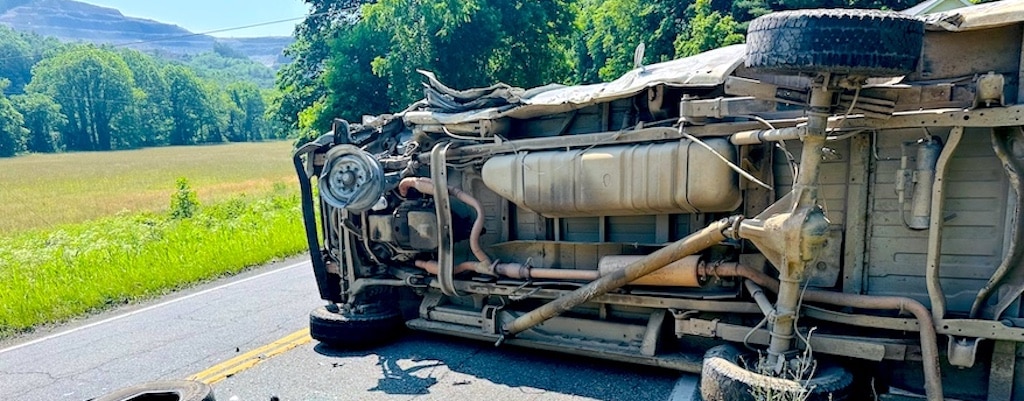
If you or someone you love has been harmed in a crash involving a commercial vehicle, you don’t have to navigate the aftermath alone. Whether your commercial truck accident claim involves potential violations of trucking regulations or multiple parties in an affected case, Hartley, Rowe, & Fowler, P.C. is here to guide you with trusted, results-driven representation.
With offices in Douglasville and Alpharetta—and the ability to assist clients across Georgia from Savannah to Rome—we make it easy for injured motorists to get the support they deserve. Our team proudly offers free consultations, giving you a chance to understand your rights, your options, and the strongest path forward. Contact or call at 678-825-6004 for your consultation today!
We operate on a contingency-fee model, meaning you pay no upfront costs, and we only receive a fee when we successfully resolve your case.